What to Wear to an Interview in 2026 (No More Guesswork)
Tue, 05 May 2026
Severity: Warning
Message: file_get_contents(http://www.geoplugin.net/json.gp?ip=216.73.216.197): failed to open stream: HTTP request failed! HTTP/1.1 403 Forbidden
Filename: helpers/location_helper.php
Line Number: 77
Backtrace:
File: /home/jarvisle/public_html/application/helpers/location_helper.php
Line: 77
Function: file_get_contents
File: /home/jarvisle/public_html/application/controllers/Blog.php
Line: 107
Function: location_details
File: /home/jarvisle/public_html/index.php
Line: 289
Function: require_once
Follow the stories of academics and their research expeditions
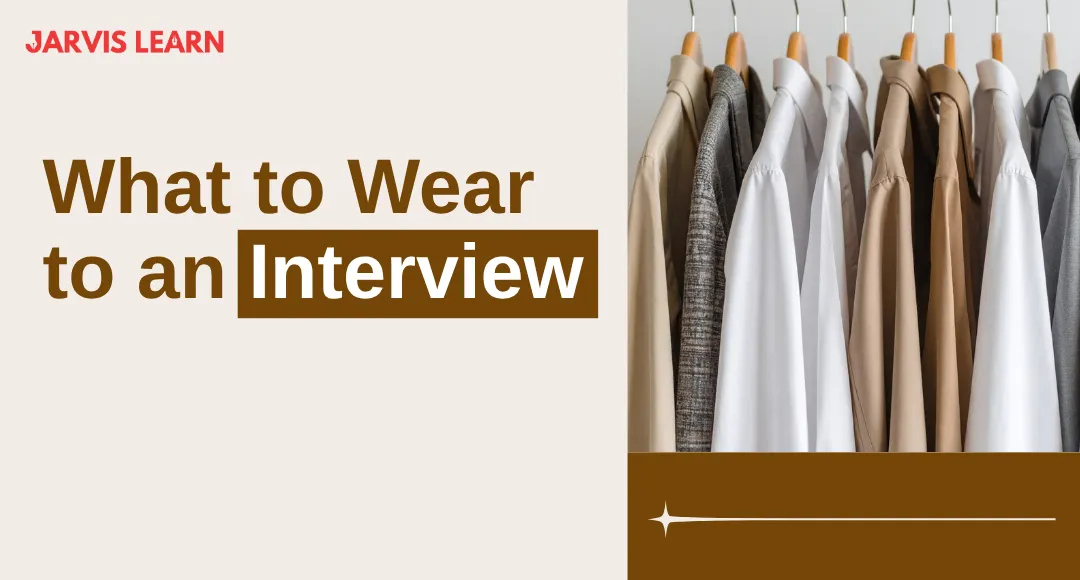
Did you know that nearly 65% of hiring managers admit that a candidate's clothing can be the deciding factor between two similar applicants? Well, in my experience of all the interviews I have conducted, I completely agree with this stat. Planning and deciding on what to wear to an interview is as important as preparing for an interview. A first impression is a lasting impression. Don't view this as being judgmental, but rather as an essential part of analyzing a candidate.
Your dressing decides your confidence. It hints at your professionalism. If perfecting your resume is one big task, understanding what to wear to an interview is on a completely new par.
Staring at a pile of clothes on your bed the night before the big meeting is exhausting, but it doesn't have to be. We have completely cracked the code on modern interview attire to remove the guesswork once and for all.
If you are stressed about your outfit today, you have every right to be. Wearing your best suit is an old-school tactic now. Imagine wearing a three-piece suit to a modern tech startup company. This will make you look as out of place as walking into a law firm wearing a hoodie.
Why does this stress us out so much? Because human psychology is ruthless. Career experts often point to the "10-second rule"—the reality that a hiring manager builds a subconscious opinion of you in the first few seconds of meeting you, long before you hand over your resume.
Your clothes send an immediate, silent message about how well you "get" the company. Now, let's not stress out too much analyzing. Let me help you with this six-step framework.
The secret to a perfect interview outfit is making them feel like you know their vibe. Check what the team wears on a random Tuesday and match the vibe. Or maybe even dress exactly one level nicer.
You can wear dark denim and a button-down if they wear jeans and T-shirts every day. And if they wear button-downs, you can maybe add a sharp blazer.
You can do so only if you know how they dress every day. But how do you figure out their daily vibe before you actually work there?
Once you figure out the company's culture, it will almost always fall into one of three buckets. Here is how to translate those corporate terms into actual clothes.
If you ask, "Can I wear jeans to a job interview?" the answer is yes, but with boundaries. For startups like a software company or an ad agency, you can wear anything casual and smart.
Always plan to wear jeans that are dark, unwashed indigo or black denim. Absolutely no rips, fading, or frayed hems.
Remember “The Social Network”? The early Facebook office scenes has its employees wearing clean tees, hoodies, and minimal styling. It’s relaxed but intentional, which aligns much better with startup smart casual today.
This is a United States standard right now. If you are applying for a marketing or administrative role, it all falls into this category. You need to look completely professional, but nobody expects you to wear a tie.
If you had seen “The Office," you would remember how Jim Halpert or Pam Beesly was dressed. Button-down shirts, neutral colors, cardigans or light layers, practical shoes. That’s exactly what business casual is. Do not try to look flashy or trendy. Just keep everything clean, approachable, and competent.
If you are walking into a major commercial bank, a corporate law firm, or interviewing for an executive position, Business Formal is mandatory. There is no room to express your quirky style here; you want to look sharp and traditional.
Think of how Harvey Specter from “The Suits” carried himself. He is basically the gold standard for modern business formals. Clean, structured, and authoritative without being loud.
Instead of great advice, you just need a pattern on exactly what to wear. If you are still thinking about what you should wear to your interview, use these patterns to have a simple and easy idea.
Comfort is a very important thing when women plan on what to wear for an interview. Tugging at a skirt and walking in painful heels, all these will make the interviewer notice your distraction. Let's see how you can win this situation.
When figuring out what to wear for an interview for men, fit is everything. A cheaper suit that is tailored perfectly to your body will always look better than an expensive suit that is two sizes too big. Let's explore a few options for your best fit for an all-rounder interview.
If traditional menswear or womenswear doesn't align with who you are, you can easily build a sharp, gender-neutral outfit that gives you respect in any room.
You might have the perfect blazer picked out, but the color you choose actually speaks volumes before you even open your mouth.
So, what color is most likely to get hired? According to hiring managers and behavioral psychology, the absolute safest and strongest choice is Navy Blue. Blue naturally signals trust, confidence, and stability. It makes you look like a safe, reliable addition to the team.
Here is how other common colors play out in the room:
Sometimes, what you leave at home is just as important as what you put on. If you are searching for what to avoid wearing to a job interview, make sure you dodge these unforced errors.
Your outfit is locked in, but your hands shouldn't be empty. Knowing what to bring to a job interview makes you look like a seasoned professional who came prepared to work.
What are 5 rules for dressing for an interview?
To summarize everything above, the top 5 golden rules are
Can I wear jeans to a job interview?
Yes, but only if you are absolutely sure the company has a "Smart Casual" or highly relaxed dress code (like a modern tech startup or creative agency). If you do wear jeans, stick strictly to dark, unwashed indigo or black denim with zero rips, fading, or frayed edges. When in doubt, size up to a pair of chinos.
Do interviewers look at your shoes?
Absolutely. Scuffed, dirty, or inappropriately casual shoes (like worn-out running sneakers) are one of the very first things hiring managers notice. It is a visual cue that signals a lack of attention to detail. Always polish your dress shoes or ensure your minimalist sneakers are spotless.
What is the biggest red flag to hear when being interviewed?
While dressing poorly (like wearing wrinkled clothes) is a massive visual red flag, the biggest behavioral red flag an interviewer can hear is a candidate complaining about a former boss or employer. Combine a sharp, professional outfit with a positive, forward-looking attitude to secure the job offer.
What should I wear as an interviewer?
If you are the one asking the questions, you represent the company's brand. You should perfectly reflect the daily office dress code. You want to look authoritative, but you also want to make the candidate feel comfortable.
Don't over-dress just to intimidate them; stick to the standard office vibe. You can copy your CEO if it feels hard to decide.
What is the 10-second rule in an interview?
The 10-second rule is the psychological reality where you make the first impression in the first 10 seconds. Your posture, your way to give a handshake, and most importantly, what you are wearing.
All these will instantly tell the hiring manager if you are a professional they want to spend 40 hours a week with.
How should I dress for a video interview (Zoom or Microsoft Teams)?
Treat a video interview exactly like an in-person interview. Dress professionally from head to toe—not just from the waist up. If you have to stand up to grab your charger or fix your lighting, you do not want the interviewer to see your pajama pants.
Also, stick to solid colors; tight stripes or houndstooth patterns often create a weird, dizzying optical illusion on webcams.

Jarvislearn
Tue, 05 May 2026
Mon, 27 April 2026
Fri, 24 April 2026


© 2024 Jarvis Learn Americas Inc. - All Rights Reserved.
Leave a comment